If your upstairs rooms are freezing in winter, unbearably hot in summer, or your energy bills seem higher than they should be, your attic insulation may be part of the problem. Hiring an experienced attic insulation contractor in Delaware County, PA can help identify insulation gaps, air leaks, ventilation issues, and other conditions that make your home harder and more expensive to heat and cool.
Cumming Construction provides attic renovation and home improvement services throughout Delaware County, including Havertown, Media, Springfield, Broomall, Drexel Hill, Haverford, Upper Darby, and surrounding communities. For local homeowners—especially those living in Delaware County’s older housing stock—proper attic insulation can make a noticeable difference in year-round comfort.
What Does an Attic Insulation Contractor Do?
An attic insulation contractor evaluates your attic and determines whether the existing insulation and surrounding building components are adequately protecting the conditioned areas of your home.
The job isn’t necessarily as simple as adding another layer of insulation.
A properly planned attic insulation project may involve:
- Inspecting existing insulation and identifying thin or missing areas
- Evaluating attic air leakage
- Identifying gaps around penetrations, wiring, plumbing, fixtures, and framing
- Reviewing attic ventilation
- Checking for visible moisture or condensation concerns
- Determining whether existing insulation should remain or be removed
- Installing appropriate new insulation
- Coordinating insulation with a larger attic renovation when necessary
The goal is to improve the overall performance of the attic rather than simply covering an existing problem with more insulation.
Signs Your Delaware County Home May Need More Attic Insulation
You don’t have to wait until you’re planning an attic remodel to have insulation concerns addressed.
There are several signs that your attic deserves a closer look.
1. Your Second Floor Is Too Hot in Summer
Does the upstairs feel dramatically warmer than the first floor?
Heat naturally rises inside the home, while your roof and attic can also absorb substantial heat during sunny Pennsylvania summers. An attic that isn’t properly insulated or ventilated can make second-floor bedrooms particularly uncomfortable.
2. Upstairs Rooms Are Cold During Winter
The opposite can happen once temperatures drop.
Insufficient insulation and uncontrolled air leakage can allow heat to escape through the upper portions of the home. Your heating system may run longer trying to maintain the thermostat setting while certain rooms remain uncomfortable.
3. Your Heating or Cooling Bills Keep Increasing
High utility bills can have many causes, including older HVAC equipment, inefficient windows and doors, air leakage, and insulation deficiencies.
If your home is difficult to keep comfortable despite significant heating or cooling, however, the attic is one of the areas worth evaluating.
4. Some Rooms Are Much More Comfortable Than Others
Large temperature differences between rooms may indicate inconsistent insulation, air leakage, HVAC issues, or a combination of factors.
An attic inspection can help determine whether insulation is contributing to the problem.
5. Your Insulation Looks Thin, Uneven, or Disturbed
Older insulation can settle, become displaced, or leave portions of the attic insufficiently protected.
If you can easily see areas with little or no insulation, it’s worth having the space professionally evaluated.
6. You’re Renovating or Finishing Your Attic
An attic renovation is an ideal time to address insulation.
Once walls, ceilings, flooring, electrical work, or HVAC improvements are underway, insulation should be integrated into the overall plan rather than treated as an afterthought.
Why Attic Insulation Matters in Delaware County Homes
Delaware County has a diverse housing stock that includes older colonials, twins, Cape Cods, ranch homes, split-levels, stone houses, and newer construction.
Older homes in communities such as Havertown, Drexel Hill, Media, Springfield, and Upper Darby can present unique challenges because today’s expectations for energy efficiency and indoor comfort are very different from when many of these homes were originally constructed.
Over the years, homes may also have undergone additions and renovations that created inconsistencies in insulation, ventilation, framing, or HVAC distribution.
That’s why there isn’t a one-size-fits-all answer for attic insulation.
A contractor should evaluate your specific attic, your home’s construction, and the way the space is being used before recommending a solution.
What Type of Attic Insulation Is Best?
The best attic insulation depends on the home’s construction, existing insulation, attic accessibility, moisture conditions, ventilation strategy, budget, and whether the attic will remain unfinished or become living space.
Common insulation approaches can include:
Fiberglass Insulation
Fiberglass is widely used in residential construction and is available in batts and loose-fill applications.
It can be an effective solution when properly installed, but gaps and compression can reduce its effectiveness. Careful installation around framing and obstructions is important.
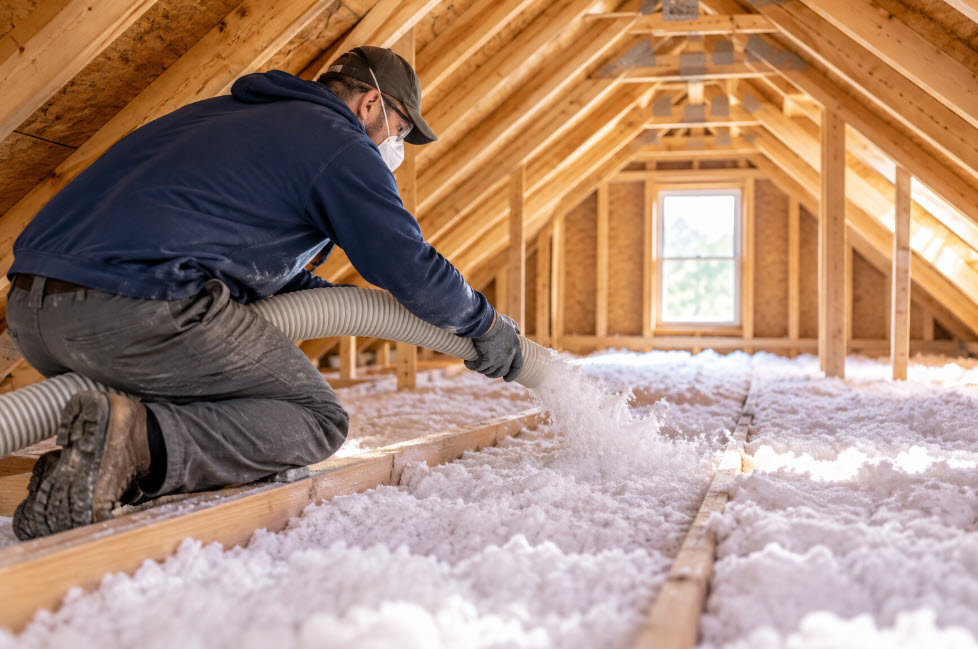
Blown-In or Loose-Fill Insulation
Loose-fill insulation can be useful for covering irregular areas and adding insulation over certain existing attic assemblies.
Because it can fill spaces that may be difficult to reach with traditional batts, it is commonly considered for attic applications.
Spray Foam Insulation
Spray polyurethane foam may be appropriate for certain attic assemblies because it can provide insulation while also helping control air movement.
However, spray foam changes how the building enclosure functions and isn’t automatically the right solution for every home. The attic’s ventilation, moisture management, roof assembly, and overall design should be considered before choosing this approach.
Attic Insulation and Air Sealing Should Work Together
This is one of the most important things homeowners should understand:
Insulation and air sealing are related, but they aren’t the same thing.
Insulation primarily slows heat transfer. Air sealing helps reduce uncontrolled movement of air through gaps and openings in the building envelope.
An attic can have a substantial amount of insulation and still perform poorly if conditioned air is escaping through openings around:
- Plumbing penetrations
- Electrical wiring
- Attic access points
- Recessed fixtures
- Ductwork
- Wall top plates
- Framing gaps
- Other attic penetrations
That’s why an experienced contractor should look beyond the visible depth of your insulation.
Adding insulation without considering significant air leakage can mean missing part of the problem.
Don’t Forget About Attic Ventilation
Insulation is only one component of a properly functioning attic.
Ventilation and moisture management matter too.
A poorly planned insulation project can potentially interfere with intended ventilation pathways. Likewise, moisture or condensation issues shouldn’t simply be covered with new insulation.
Before insulating an attic, a contractor should consider how insulation interacts with the roof assembly and ventilation strategy.
This becomes especially important when converting an unfinished attic into conditioned living space because the thermal boundary of the home may change.
Insulating an Attic Before Finishing It
If you’re considering turning an unused attic into a bedroom, home office, playroom, guest suite, or other finished area, plan the insulation strategy at the beginning of the renovation.
Cumming Construction specializes in attic renovations and can evaluate considerations such as:
- Framing and structural requirements
- Insulation
- Air sealing
- Ventilation
- Drywall and interior finishes
- Flooring
- Electrical and lighting
- HVAC and climate control
- Storage
- Overall space planning
Taking an integrated approach helps ensure the finished attic doesn’t simply look beautiful—it also feels like a comfortable extension of the rest of your home.
Can Better Attic Insulation Lower Energy Bills?
Potentially, yes.
Improving an under-insulated or excessively leaky attic can reduce unwanted heat transfer and help the home’s heating and cooling systems maintain indoor temperatures more efficiently.
The actual savings will vary significantly from house to house. Insulation isn’t a magic fix for every high utility bill, and homeowners should be cautious of anyone promising a specific reduction without evaluating the property.
HVAC efficiency, windows, doors, ductwork, air leakage, thermostat settings, home size, and occupant behavior can all affect energy consumption.
The better question is:
Is the attic currently performing the way it should?
If it isn’t, improving it can contribute to a more efficient and comfortable home.
Attic Insulation for Older Delaware County Homes
Older homes deserve particular attention because construction techniques have changed substantially over the decades.
A home in Havertown or Drexel Hill built generations ago may have gone through multiple renovations, additions, roof replacements, electrical upgrades, and insulation projects.
That can leave behind an attic containing several generations of building materials and improvements.
Instead of automatically adding insulation, an experienced local contractor can evaluate how those pieces work together.
That local experience is valuable because a solution appropriate for newer construction may not necessarily be the best approach for a much older Delaware County home.
What Should You Ask an Attic Insulation Contractor?
Before hiring someone to work on your attic, ask questions that reveal whether they’re looking at the whole home rather than simply selling insulation.
Good questions include:
- What condition is my existing insulation in?
- Do you see obvious areas of air leakage?
- Are there moisture or ventilation concerns that should be addressed first?
- Should any existing insulation be removed?
- What insulation approach do you recommend for my house, and why?
- How will you handle attic access points and penetrations?
- Will the insulation affect existing attic ventilation?
- What should be addressed differently if I eventually want to finish the attic?
A qualified contractor should be able to explain the reasoning behind the recommendation in plain language.
Why Choose Cumming Construction for Attic Work in Delaware County?
Cumming Construction has served homeowners in the Philadelphia suburbs since 1999 and is based locally in Havertown.
Rather than looking at the attic as an isolated component, our team can evaluate insulation as part of the home’s larger construction and renovation needs.
Our attic and home remodeling experience includes insulation, ventilation, framing, structural adjustments, drywall, flooring, electrical improvements, HVAC considerations, custom storage, and complete attic conversions.
That broader construction experience is particularly valuable when an insulation concern overlaps with an older attic, previous renovation work, moisture concerns, or plans to eventually finish the space.
We serve homeowners throughout Delaware County, including:
- Havertown
- Haverford
- Broomall
- Media
- Springfield
- Drexel Hill
- Upper Darby
- Newtown Square
- And surrounding Delaware County communities
Schedule an Attic Evaluation in Delaware County, PA
If your attic is under-insulated, uncomfortable, unfinished, or part of a future remodeling project, it’s worth having the entire space evaluated before deciding on a solution.
Cumming Construction can help Delaware County homeowners determine how insulation, air sealing, ventilation, and the attic’s overall construction can work together to create a more comfortable and functional home.
Looking for an attic insulation contractor in Delaware County, PA? Contact Cumming Construction to discuss your attic and home improvement project.
Frequently Asked Questions About Attic Insulation in Delaware County, PA
How much attic insulation do I need in Pennsylvania?
The appropriate amount depends on the type of insulation, its R-value, the existing attic assembly, and applicable energy-code recommendations. Instead of relying solely on insulation depth, homeowners should have the attic evaluated to determine its existing condition and appropriate insulation strategy.
How do I know if my attic needs more insulation?
Common signs include uncomfortable second-floor temperatures, unusually high heating or cooling costs, visible areas of thin or missing insulation, and significant temperature differences between rooms. A professional attic inspection can help determine whether insulation is contributing to the issue.
What is the best attic insulation for homes in Delaware County, PA?
There isn’t one insulation product that’s best for every Delaware County home. Fiberglass, loose-fill insulation, and spray foam can each be appropriate depending on the attic’s construction, existing insulation, ventilation, moisture conditions, and whether the attic is conditioned or unfinished.
Should old attic insulation be removed before adding new insulation?
Not always. Existing insulation may sometimes remain in place, while contaminated, damaged, wet, or otherwise problematic material may require removal. The existing insulation should be inspected before making that decision.
Should you air seal an attic before adding insulation?
Air sealing should be considered as part of an attic insulation project because insulation alone does not stop all uncontrolled air movement. Addressing accessible air leaks before adding insulation can help improve the overall performance of the attic assembly.
Can attic insulation make upstairs rooms cooler in summer?
Proper insulation can reduce heat transfer between the attic and conditioned areas below, which may help improve upstairs comfort. Ventilation, air sealing, HVAC performance, ductwork, windows, and other factors can also affect second-floor temperatures.
Can attic insulation help with cold bedrooms in winter?
It can if inadequate attic insulation or air leakage is contributing to heat loss. However, cold rooms may also result from HVAC distribution issues, windows, exterior-wall insulation, or other building-envelope problems.
Do I need a contractor to insulate my attic?
Some simple insulation projects can be DIY-friendly, but professional evaluation is especially valuable in older homes, finished attics, difficult-to-access spaces, or whenever there are questions about moisture, ventilation, electrical components, air sealing, or future renovations.
Can Cumming Construction insulate an attic that I’m planning to finish?
Yes. Attic insulation can be incorporated into a larger attic remodeling project so insulation, ventilation, framing, HVAC, electrical work, drywall, flooring, and finishes are planned together.
Who provides attic insulation and attic remodeling in Delaware County, PA?
Cumming Construction is based in Havertown and provides attic remodeling and home improvement services throughout Delaware County. Homeowners considering insulation improvements or a larger attic renovation can have the space evaluated as part of the overall project.