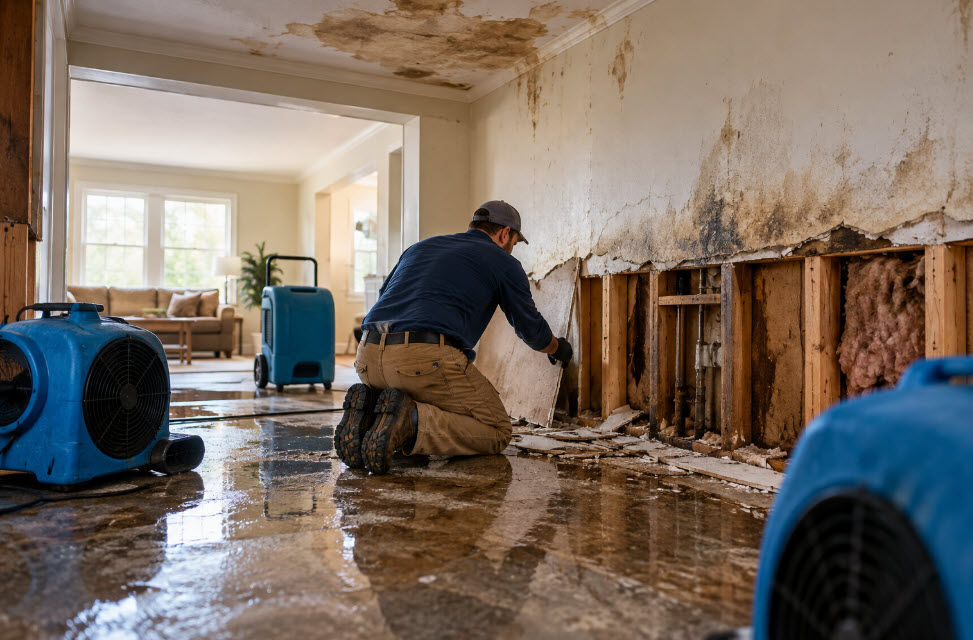
Water damage can turn a small home maintenance problem into a major repair surprisingly quickly. If you need home water damage repair in Delaware County, PA, the most important steps are to stop the source of the water, thoroughly dry the affected area, identify and remove damaged materials, address the underlying cause, and properly rebuild the space.
Simply drying a wet floor or patching stained drywall often isn’t enough. Water can travel behind walls, underneath flooring, around windows, into insulation, and through framing before the full extent of the damage becomes visible.
For homeowners in Havertown, Media, Springfield, Broomall, Newtown Square, and throughout Delaware County, Cumming Construction can help repair and rebuild areas of the home affected by water while also addressing construction-related issues that may have allowed moisture to enter in the first place.
What Should You Do After Water Damage in Your Home?
If you discover water damage, the first priority is finding and stopping the source.
Depending on the situation, that may mean shutting off a water supply, repairing a plumbing issue, stopping exterior water intrusion, addressing drainage problems, or preventing additional rainwater from entering the home.
Once the source is controlled, the affected area needs to be assessed and dried.
A typical water damage repair process may involve:
- Identifying and stopping the source of the water
- Determining how far the moisture has traveled
- Removing standing water when necessary
- Drying the affected area
- Removing materials that cannot be safely salvaged
- Checking framing and surrounding building materials
- Correcting the condition that caused the damage
- Replacing drywall, flooring, trim, insulation, tile, cabinetry, or other damaged materials
- Finishing and restoring the space
The goal shouldn’t be to simply make the water stain disappear. The goal is to restore the affected portion of the home and reduce the likelihood of the same problem happening again.
What Causes Water Damage in Delaware County Homes?
Water damage doesn’t always begin with a dramatic flooded basement or burst pipe. Some of the most expensive problems develop gradually.
Homes throughout Delaware County range from older properties in communities like Havertown and Swarthmore to larger homes and newer renovations in areas such as Newtown Square and Glen Mills. Different properties can have very different moisture vulnerabilities.
Some of the most common causes of residential water damage include:
Plumbing Leaks
Leaking supply lines, drainpipes, toilets, sinks, tubs, showers, and appliances can introduce water into areas you don’t immediately see.
A slow leak underneath a bathroom or behind a kitchen cabinet can damage subflooring, drywall, framing, and finishes long before a homeowner realizes there’s a problem.
Basement Water Intrusion
Basements are particularly vulnerable because they’re located below grade.
Heavy rainfall, poor exterior drainage, foundation issues, groundwater pressure, or inadequate basement drainage can all contribute to moisture problems.
Recurring basement water shouldn’t automatically be treated as an isolated cleanup problem. The source of the water should be investigated before finishing or refinishing the basement.
Roof Leaks
A damaged roof or failed flashing can allow rainwater to enter an attic or wall cavity.
Homeowners may first notice a ceiling stain, but the water may have affected insulation, drywall, sheathing, framing, or other materials before becoming visible inside the house.
Window and Door Leaks
Water stains surrounding windows and exterior doors can indicate failed flashing, deteriorated sealant, improper installation, or another issue with the surrounding building envelope.
Repeatedly caulking the interior doesn’t necessarily solve the underlying problem.
Bathroom Water Damage
Bathrooms contain several potential sources of moisture, including toilets, showers, tubs, sinks, plumbing lines, and tile assemblies.
Signs of trouble can include loose tile, soft flooring, peeling paint, swollen trim, staining, or recurring moisture around the shower or toilet.
Appliance Leaks
Dishwashers, refrigerators, washing machines, water heaters, and other appliances can leak unexpectedly or gradually.
Water may travel underneath finished flooring or cabinetry, making the visible damage only part of the actual problem.
How Do You Know If Water Damage Is Serious?
Not all water damage requires a major renovation, but there are several signs that homeowners shouldn’t ignore.
Watch for:
- Brown or yellow stains on walls or ceilings
- Bubbling or peeling paint
- Soft or sagging drywall
- Warped hardwood flooring
- Buckled laminate or other flooring
- Swollen baseboards or trim
- Loose bathroom tile
- Musty or damp odors
- Visible mold-like growth
- Damp basement walls or floors
- Repeated moisture after heavy rain
- Crumbling or deteriorating building materials
- Doors or trim that suddenly swell or stick
One useful rule: the visible stain isn’t necessarily the boundary of the water damage.
Water follows gravity, framing, seams, penetrations, and other paths through a building. A small ceiling stain can sometimes originate several feet away from where the water actually entered.
Can Water-Damaged Drywall Be Repaired?
Sometimes.
Whether drywall can remain in place depends on the source of the water, how wet it became, how long it remained wet, and whether the material has deteriorated.
Minor surface damage caused by a quickly resolved issue may require relatively limited repairs.
Drywall that has become soft, swollen, crumbling, extensively saturated, or otherwise compromised may need to be removed and replaced.
The cavity behind the drywall also matters. Covering damaged drywall before the wall assembly has adequately dried can trap moisture inside the structure.
After damaged material is removed and the underlying problem has been corrected, the wall can be rebuilt, finished, primed, and painted to blend with the surrounding space.
What Happens If Water Gets Under Flooring?
This is another situation where appearances can be misleading.
Water can travel beneath hardwood, luxury vinyl plank, laminate, tile, and other flooring systems. Depending on the material and severity of the exposure, homeowners may notice:
- Cupping
- Crowning
- Warping
- Buckling
- Loose flooring
- Discoloration
- Soft spots
- Damaged subflooring
- Persistent odors
The flooring itself isn’t always the only concern. The subfloor beneath it should also be evaluated.
If damaged flooring is replaced without addressing moisture underneath, the new floor could eventually develop problems as well.
Water Damage in Basements: Fix the Cause Before Remodeling
This is especially important for homeowners considering a finished basement.
If your basement experiences recurring moisture or water intrusion, don’t cover the problem with new drywall and flooring.
Determine why the water is entering first.
Depending on the property, solutions may involve improving drainage, correcting grading or exterior conditions, installing or improving a French drain, adding a sump pump, waterproofing vulnerable areas, or completing other moisture-control improvements.
Once the basement is appropriately protected, it becomes a much better candidate for finishing or remodeling.
A beautiful basement renovation doesn’t mean much if the next major rainstorm puts water underneath the flooring.
Water Damage Around Windows and Doors
Water damage surrounding a window doesn’t automatically mean the window itself is defective.
The issue could involve:
- Flashing
- Exterior trim
- Sealants
- Siding
- Improper installation
- Deteriorated surrounding materials
- Water entering from another location above the opening
That’s why diagnosing the source matters.
Cumming Construction provides window and door installation and replacement in addition to broader home remodeling and repair services. When water has damaged the surrounding wall, trim, or interior finishes, the project may require more than simply installing a replacement window.
Repairing a Home After the Water Is Gone
Water removal is only one part of recovering from significant home water damage.
Once emergency mitigation and drying are complete, homeowners may still be left with damaged:
- Drywall
- Ceilings
- Flooring
- Trim and molding
- Doors
- Windows
- Tile
- Cabinetry
- Insulation
- Subflooring
- Framing
- Basement finishes
- Bathroom finishes
This is where an experienced remodeling contractor can become especially valuable.
Instead of treating each damaged component as an unrelated repair, the affected space can be evaluated as a whole.
For example, water damage in a bathroom might require drywall repair, new tile, subfloor repairs, trim replacement, painting, and other finish work. A basement water problem might require drainage improvements followed by reconstruction of the finished basement.
Should You Repair or Remodel After Water Damage?
If the damaged area was already outdated or wasn’t functioning well for your family, restoration can sometimes be an opportunity to make improvements instead of rebuilding everything exactly as it was.
For example, homeowners might choose to:
- Replace outdated flooring
- Remodel a damaged bathroom
- Update kitchen cabinetry
- Improve basement drainage before refinishing
- Replace older windows or doors
- Change the layout of a damaged room
- Upgrade insulation
- Install more moisture-resistant materials
- Replace damaged trim with custom carpentry
The priority should always be correcting the moisture problem first. Once that’s accomplished, you can decide whether simple restoration or a larger renovation makes more sense.
Does Homeowners Insurance Cover Water Damage Repair?
It depends on the cause of the damage and the terms of your individual insurance policy.
Certain sudden and accidental events may be treated differently from long-term leaks, maintenance issues, groundwater intrusion, flooding, or other causes.
If the damage may involve an insurance claim, document the affected areas with photographs and contact your insurance company promptly to understand your policy and next steps.
Avoid assuming that all types of water damage are covered simply because the damage happened inside your home.
Why Choose a Local Contractor for Water Damage Repairs?
Water damage often involves more than replacing one piece of drywall.
You may need carpentry, flooring, tile, windows, doors, drainage improvements, drywall, structural repairs, or remodeling work. Having an experienced general contractor coordinate the rebuilding process can simplify a project involving several different trades.
Cumming Construction is based in Havertown and has served homeowners throughout the Philadelphia suburbs since 1999.
That local experience is particularly valuable when working with the area’s diverse housing stock, including older homes where opening a wall or floor can sometimes reveal additional conditions that weren’t visible beforehand.
Home Water Damage Repair Throughout Delaware County and Southeastern PA
Cumming Construction serves homeowners throughout Delaware County, Montgomery County, Chester County, and Philadelphia.
Our Delaware County service area includes communities such as:
Havertown, Broomall, Springfield, Media, Newtown Square, Upper Darby, Ridley Park, Swarthmore, and Glen Mills.
We also serve communities throughout Montgomery County and Chester County, as well as neighborhoods across Philadelphia and the Main Line.
Whether you’re dealing with water-damaged drywall in Havertown, a moisture-damaged basement in Media, flooring damage in Springfield, or a larger restoration and remodeling project elsewhere in the Philadelphia suburbs, getting the underlying problem corrected is the first step toward making the home whole again.
Need Home Water Damage Repair in Delaware County, PA?
If water has damaged part of your home, don’t focus only on what you can see.
A successful repair should answer three questions:
- Where did the water come from?
- How much of the home was affected?
- What needs to be done to prevent the problem from happening again?
Once those questions are answered, damaged areas can be properly repaired and rebuilt.
Cumming Construction provides home improvement, remodeling, carpentry, flooring, window and door, basement, drainage, and renovation services for homeowners throughout Delaware County and the surrounding Philadelphia region.
Contact Cumming Construction to discuss your water-damaged space and determine the right approach for repairing and restoring your home.
Frequently Asked Questions About Home Water Damage Repair
Who repairs water damage in a house in Delaware County, PA?
The right professional depends on the extent and source of the damage. Emergency water extraction may require a mitigation company, while rebuilding damaged drywall, flooring, framing, tile, cabinetry, windows, doors, and finished living spaces can require an experienced general or remodeling contractor. For substantial damage, multiple trades may be involved.
How quickly should water damage be repaired?
The source of active water should be addressed as soon as possible. Wet materials should then be evaluated and properly dried before reconstruction begins. Waiting can allow moisture to spread and may increase the amount of material requiring repair.
Can you repair water-damaged drywall without replacing it?
Minor damage may sometimes be repaired, but drywall that is significantly saturated, soft, swollen, crumbling, contaminated, or otherwise deteriorated may need to be removed. The wall cavity should also be adequately dried before repairs are completed.
What should I do if my ceiling has a water stain?
First determine where the water originated. Common causes include plumbing leaks, bathroom fixtures, roof leaks, and water entering around exterior components. Don’t simply paint over the stain without determining why it appeared.
Who repairs water-damaged floors near me?
A remodeling or flooring contractor can evaluate damaged finished flooring and the subfloor underneath it. The correct repair depends on the flooring material, amount of water exposure, condition of the subfloor, and whether the moisture source has been eliminated.
How do you fix a basement that keeps getting water?
The solution depends on how the water is entering. Drainage improvements, French drains, sump pumps, waterproofing, grading corrections, or other moisture-control measures may be appropriate. The cause should be corrected before investing in a finished basement renovation.
Can a contractor repair water damage around a window?
Yes. Water damage around a window may involve the window, flashing, exterior materials, insulation, drywall, framing, or interior trim. Identifying the actual entry point is important before repairing the cosmetic damage.
Should I remodel after water damage?
You don’t necessarily need to remodel, but substantial damage can provide an opportunity to update a room while repairs are already underway. Correct the source of the water first, then decide whether restoration or a larger renovation provides the best long-term value.
Does Cumming Construction serve areas outside Delaware County?
Yes. Cumming Construction serves homeowners throughout Delaware County, Montgomery County, Chester County, Philadelphia, and surrounding Main Line communities.
How do I find a water damage repair contractor near me?
Look for a licensed and insured contractor with experience repairing the type of damage your home has sustained. For reconstruction projects, choose a contractor capable of coordinating the different components involved—such as drywall, flooring, carpentry, tile, windows, doors, and other remodeling work—rather than focusing only on cosmetic repairs.