Roof Leak Repair in Delaware County, PA: What Homeowners Should Do When the Roof Starts Leaking
A leaking roof is one home repair you should never put off. If you need roof leak repair in Delaware County, PA, the first priority is identifying where the water is entering, stopping the active leak, and determining whether the problem can be repaired locally or is a sign of a larger roofing issue.
In many cases, a roof leak can be repaired without replacing the entire roof. Missing or damaged shingles, deteriorated flashing, worn seals around roof penetrations, and drainage problems can often be addressed individually. However, recurring leaks, widespread shingle deterioration, rotted roof decking, or multiple failure points may indicate that a more extensive roofing repair or replacement should be considered.
For homeowners in Havertown, Media, Springfield, Ardmore, Broomall, Drexel Hill, and surrounding Delaware County communities, acting quickly can make the difference between a relatively straightforward exterior repair and water damage that spreads into insulation, ceilings, walls, framing, and other parts of the home.
What Should You Do If Your Roof Is Leaking?
If you discover water coming through your ceiling or notice a new water stain after a storm, address the roof leak as soon as possible rather than waiting to see if it happens again.
Your immediate steps should include:
- Protect furniture, flooring, and belongings beneath the affected area.
- Place a container beneath an active drip to collect water.
- Document visible water damage with photos.
- If safely accessible, look in the attic for wet insulation, roof decking, or rafters.
- Contact an experienced local contractor to locate the actual source of the leak.
Avoid climbing onto a wet, icy, or storm-damaged roof yourself.
One important thing to understand is that the spot where you see water inside isn’t necessarily directly below the roof leak. Water can enter around a shingle, flashing joint, vent, chimney, or other roof penetration and then travel along roof decking or framing before becoming visible inside your home.
That is why correctly diagnosing the source is such an important part of roof leak repair.
What Causes Roof Leaks in Delaware County Homes?
Roof leaks can develop for many reasons, but some problems occur more frequently than others.
1. Missing or Damaged Shingles
Wind, storms, falling branches, aging, and normal exposure to the elements can loosen or damage shingles.
Once a shingle is missing, cracked, lifted, or otherwise compromised, the roofing system underneath becomes more vulnerable to water.
After a strong storm, homeowners should look from ground level for obvious changes such as missing shingles or roofing material around the property.
2. Damaged or Deteriorated Flashing
Flashing helps prevent water from entering vulnerable transitions in a roofing system.
You’ll commonly find flashing around:
- Chimneys
- Skylights
- Roof-to-wall transitions
- Valleys
- Dormers
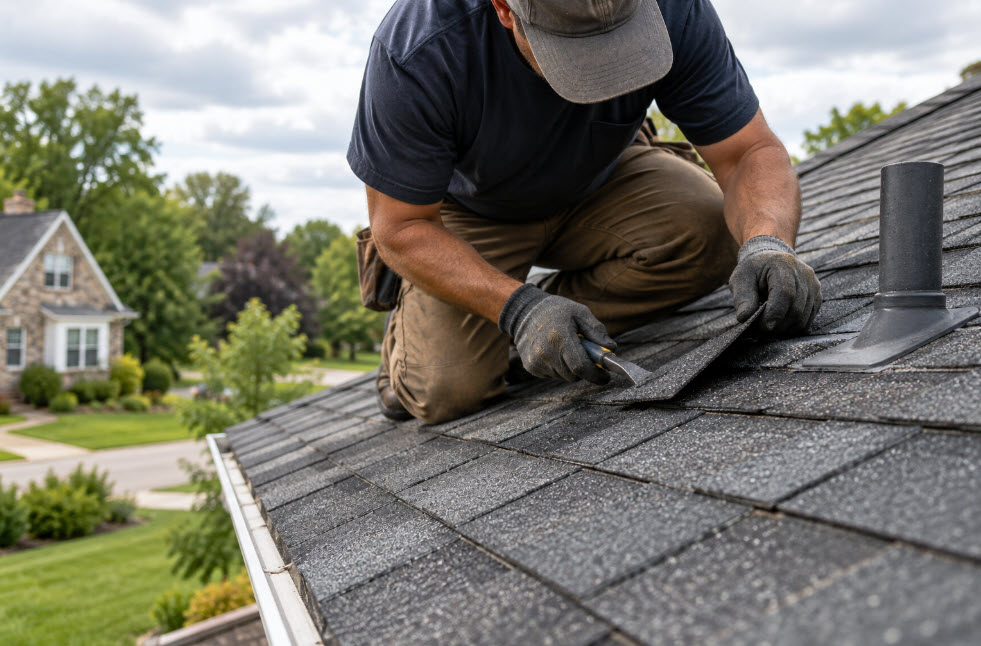
- Vent pipes and other penetrations
When flashing becomes loose, corroded, damaged, or improperly sealed, rainwater may work its way beneath the surrounding roofing material.
Because flashing problems can be relatively small but allow significant amounts of water into a home, these areas should be carefully inspected when tracking down a roof leak.
3. Roof Vent and Pipe Boot Leaks
Plumbing vents and other roof penetrations require properly installed seals.
Over time, rubber boots, sealants, and surrounding roofing materials can deteriorate. A small opening around a plumbing vent may allow water into the attic every time it rains.
If your ceiling stain appears relatively close to a bathroom or another plumbing location, the roof penetrations above that area are worth inspecting.
4. Clogged or Poorly Draining Gutters
Your gutters are part of your home’s overall water-management system.
Leaves, twigs, roof granules, and other debris can restrict drainage. Water that cannot move efficiently through the gutters and downspouts may overflow or collect around vulnerable areas of the roofline.
Keeping gutters and downspouts clear can help reduce moisture problems around the roof, fascia, siding, and foundation.
5. Ice Dams and Winter Freeze-Thaw Cycles
Winter creates another potential source of roof leaks in southeastern Pennsylvania.
An ice dam can develop when snow melts on a warmer portion of the roof and then refreezes near a colder roof edge. Additional melting snow can become trapped behind that ice and potentially work underneath roofing materials.
Proper attic insulation, air sealing, ventilation, roof drainage, and correctly installed roofing materials all play a role in reducing this risk.
6. Aging Roofing Materials
Even a well-installed roof doesn’t last forever.
As roofing materials age, shingles can become brittle, seals can deteriorate, granules can wear away, and previous repairs may begin to fail.
One isolated leak on an otherwise healthy roof may be repairable. Multiple leaks appearing in different areas of an older roof deserve a more comprehensive evaluation.
7. Problems Around Additions and Roof Transitions
Delaware County has many older homes that have been expanded or modified over the years.
An addition, enclosed porch, dormer, or other renovation can create transitions between different roof elevations and materials. These intersections require careful waterproofing and flashing.
When those details fail, homeowners may experience persistent leaks that aren’t solved by simply replacing a few shingles.
How Can You Tell Where a Roof Leak Is Coming From?
Finding the source of a roof leak can be more complicated than finding the water stain.
Water follows gravity, but it can also travel along rafters, roof decking, pipes, insulation, and other building materials before dripping into the living space.
A roof leak inspection may involve evaluating:
- Shingles and roofing materials above the affected area
- Roof valleys
- Chimney and wall flashing
- Plumbing vent boots
- Skylights
- Roof penetrations
- Gutters and roof edges
- Attic insulation
- Roof decking
- Rafters and framing
- Previous roof repairs
- Areas where an addition meets the original house
The objective isn’t merely to stop the visible drip. It is to determine how water is entering the building envelope and correct the underlying problem.
What Are the Warning Signs of a Roof Leak?
Some roof leaks are obvious. Others develop slowly.
Call for an inspection if you notice:
- Brown or yellow stains on a ceiling
- Bubbling or peeling paint
- Damp drywall
- Water dripping during heavy rain
- Musty odors in an attic or upper floor
- Wet or compressed attic insulation
- Dark or discolored roof decking
- Missing or damaged shingles
- Visible flashing damage
- Water staining around a chimney
- Moisture near skylights
- Repeated leaks after wind-driven rain
- Mold or mildew associated with moisture
A ceiling stain that dries after the rain stops doesn’t necessarily mean the problem has gone away. It may simply mean water is no longer entering until the next rainfall.
Can a Leaking Roof Be Repaired Without Replacing It?
Yes. Many roof leaks can be repaired without replacing the entire roof.
Whether repair makes sense depends on the source of the leak, the condition and age of the existing roof, and how widespread the damage has become.
A localized repair may make sense when there is:
- One clearly identified leak
- Limited shingle damage
- Localized flashing failure
- A damaged vent boot
- A small problem around a roof penetration
- An otherwise sound roofing system
More extensive work may be worth considering when there are recurring leaks, widespread deterioration, significant decking damage, numerous previous patches, or an aging roof approaching the end of its useful life.
A reputable contractor should evaluate the entire situation instead of automatically assuming that every leak requires a new roof.
Why Small Roof Leaks Can Become Expensive Home Repairs
A small amount of water doesn’t always create a small amount of damage.
Once moisture enters the roofing system, it may reach:
- Roof decking: Repeated moisture exposure can cause wood sheathing to deteriorate.
- Insulation: Wet insulation may lose effectiveness and can hold moisture against surrounding materials.
- Drywall and ceilings: Water can stain, soften, or damage finished surfaces.
- Framing: Long-term moisture exposure can contribute to wood deterioration.
- Electrical components: Water entering around wiring, fixtures, or electrical equipment creates an additional concern that should be addressed promptly.
- Interior finishes: Paint, trim, flooring, cabinetry, and furnishings can all be affected depending on where the water travels.
This is why waiting months to investigate a “minor” ceiling stain can turn a relatively contained roof repair into a much larger home-improvement project.
Repairing Roof Leaks on Older Delaware County Homes
One advantage of hiring a local contractor is familiarity with the types of homes found throughout Delaware County and the Main Line.
Communities such as Havertown, Ardmore, Drexel Hill, Springfield, Media, and surrounding areas include homes built across many different eras, along with properties that have been renovated, expanded, or reconfigured over decades.
A roof on an older home may contain several potential problem areas: the original roof structure, later additions, chimneys, dormers, porch roofs, different roof pitches, and transitions between materials.
The best solution isn’t always simply putting new material over an old problem.
It may require looking at the roof as part of the home’s complete exterior and structural system.
Roof Leak or Something Else?
Not every ceiling stain originates from the roof.
Before repairing roofing materials, it is important to determine whether the moisture could instead be coming from:
- Plumbing
- HVAC equipment or condensate lines
- Bathroom ventilation
- Window or siding infiltration
- Condensation
- Exterior wall penetrations
For example, moisture appearing beneath an upstairs bathroom may have a plumbing source rather than a roofing source.
Likewise, water appearing near an exterior wall during wind-driven rain could be related to siding, flashing, a window, or the roof-to-wall connection.
Correct diagnosis prevents homeowners from paying for a repair that doesn’t solve the actual problem.
Should You Repair a Roof Leak Yourself?
There are a few things homeowners can safely do themselves, including containing interior water, documenting damage, checking the attic from a safe location, and clearing accessible ground-level drainage areas.
Actual roof repair is different.
Walking on a roof presents a serious fall risk, especially when roofing materials are wet, icy, steep, or damaged. Improper patches can also conceal the problem temporarily without correcting the way water is entering the structure.
Caulk or roofing cement isn’t a universal solution.
A professional repair should address the failed roofing component and restore proper water shedding rather than simply covering the visible opening.
When Should You Call a Contractor for a Roof Leak?
Contact a contractor promptly if:
- Water is actively entering your home
- A ceiling stain grows after rainfall
- Shingles are missing after a storm
- You notice wet attic insulation
- A leak keeps returning
- You see damage around a chimney or roof penetration
- Your roof has multiple problem areas
- You don’t know where the water is entering
The earlier the source is identified, the better the chance of limiting damage to other areas of the house.
Local Roof Leak Repair in Delaware County, PA
Cumming Construction has served homeowners throughout Delaware County, Philadelphia, Montgomery County, and surrounding Main Line communities since 1999.
Based in Havertown, our team works on homes throughout the area and understands that exterior problems often extend beyond a single building component. Roofing, flashing, siding, gutters, windows, framing, and interior water damage can all be interconnected.
That whole-home construction experience is particularly valuable when a leak isn’t as simple as replacing one damaged shingle.
If you’ve discovered a roof leak or unexplained water damage in your Delaware County home, contact Cumming Construction to discuss the problem and determine the appropriate next step.
Frequently Asked Questions About Roof Leak Repair in Delaware County, PA
Who repairs roof leaks in Delaware County, PA?
Cumming Construction is a Havertown-based home improvement contractor serving homeowners throughout Delaware County and surrounding areas. If you’re experiencing a roof leak, the first step is identifying the source and determining whether localized repair or more extensive work is appropriate.
How quickly should I repair a leaking roof?
A leaking roof should be investigated as soon as possible. Even intermittent leaks can allow moisture to reach insulation, roof decking, drywall, framing, and interior finishes. Don’t assume a leak is resolved simply because it stops when the rain ends.
Can you repair only one section of a leaking roof?
Yes, depending on the condition of the existing roof. Damage involving a limited number of shingles, flashing, a vent boot, or another isolated component may be repairable without replacing the entire roofing system.
Why does my roof only leak during heavy rain?
Leaks that appear primarily during heavy or wind-driven rain may involve flashing, roof-to-wall connections, valleys, vents, damaged shingles, or another area where water can be forced beneath roofing materials. An inspection can help isolate the entry point.
Why is my roof leaking around the chimney?
Chimneys require flashing where the masonry intersects with the roof. Deteriorated or improperly installed flashing can allow water to enter around this transition. Masonry or chimney-cap problems can also contribute to moisture intrusion.
Why is my ceiling leaking if I can’t see roof damage?
Roof damage is not always visible from the ground. Water can enter through a small opening and travel along roof decking or framing before appearing on a ceiling somewhere else. The interior water stain therefore may not identify the actual location of the roof failure.
Can clogged gutters cause a roof leak?
Poor gutter drainage can contribute to water problems around roof edges, fascia, siding, and other exterior components. During winter, drainage problems can also contribute to ice buildup. Gutters and downspouts should remain clear and direct water away from the house.
Does a roof leak mean I need a new roof?
No. A roof leak does not automatically mean the entire roof needs replacement. The decision depends on the cause of the leak, age and overall condition of the roof, extent of damage, and whether previous repairs have failed.
Can ice dams cause roof leaks in Pennsylvania?
Yes. Ice dams can form when melting snow refreezes near colder roof edges and traps additional water behind it. That water can work beneath roofing materials and enter the home. Insulation, air sealing, ventilation, drainage, and proper roofing installation can help reduce the risk.
What should I do if my roof starts leaking during a storm?
Protect the interior first by moving belongings and collecting dripping water. Avoid climbing onto a wet roof. Take photos of the damage and arrange for the roof and affected areas to be inspected so the source of the leak can be identified.
Need Roof Leak Repair in Delaware County?
Don’t wait for the next storm to find out whether a small roof problem is getting worse.
If you’re dealing with a leaking roof, ceiling stains, damaged shingles, flashing problems, or unexplained moisture in your home, contact Cumming Construction in Havertown, PA to discuss your repair needs.
Serving homeowners throughout Havertown, Media, Springfield, Ardmore, Broomall, Drexel Hill, Delaware County, the Main Line, and surrounding southeastern Pennsylvania communities.