Basement Waterproofing & Moisture Problems in Delaware County: Causes, Warning Signs & Solutions
If you’re dealing with a damp basement, musty smell, water stains, or puddles after heavy rain, you may need basement waterproofing in Delaware County, PA. Basement moisture is especially important to address before finishing or remodeling a basement because simply covering damp walls or floors can trap moisture and create bigger problems later.
The good news is that many basement moisture problems can be corrected once the source of the water is identified. Depending on your home, the solution may involve improving exterior drainage, repairing cracks, installing a French drain or sump pump, adding moisture barriers, controlling humidity, or using a combination of methods.
At Cumming Construction, we help homeowners throughout Delaware County identify and address basement moisture issues so their lower levels can remain dry, functional, and ready for future remodeling.
Why Are Basements in Delaware County Prone to Moisture?
Basements naturally face more moisture exposure than above-grade areas because much of the foundation sits below ground.
When rain saturates the soil surrounding a house, water can accumulate against foundation walls and beneath the basement floor. If drainage is inadequate or the foundation has vulnerable areas, that moisture can eventually make its way inside.
The age of the area’s housing stock can add another layer of complexity. Many homes throughout Havertown, Media, Springfield, Drexel Hill, Upper Darby, Broomall, Swarthmore, and surrounding Delaware County communities were built long before today’s basement waterproofing methods became common.
Older foundations may also have cracks, porous masonry, aging mortar joints, or drainage systems that no longer adequately manage water around the home.
The result can be anything from slightly elevated humidity to water actively entering the basement during a storm.
What Causes Basement Moisture?
There isn’t one universal cause of a wet basement. Finding the source is the most important step because different moisture problems require different solutions.
Here are some of the most common causes we see.
1. Poor Drainage Around the Foundation
Rainwater should move away from your house.
When the ground slopes toward the foundation instead, water can collect alongside basement walls. During periods of heavy rain, saturated soil can create pressure against the foundation and increase the chance of water finding a path inside.
Correcting drainage around the home may be an important part of the waterproofing strategy.
2. Clogged or Improperly Discharging Gutters
Your roof collects a significant amount of water during a storm. Gutters and downspouts are supposed to move that water safely away from the foundation.
If gutters overflow or downspouts release water immediately alongside the house, large amounts of water can accumulate around the basement.
Before assuming you need an extensive interior waterproofing project, it is worth evaluating what is happening outside the house when it rains.
3. Hydrostatic Pressure
Water can also build up in the soil underneath and around a foundation.
As groundwater rises, it creates pressure against basement walls and floors. Eventually, water may enter through cracks, joints, porous masonry, or the point where the basement wall meets the floor.
This is one reason some basements remain completely dry during light rain but develop water along the perimeter after prolonged or particularly heavy storms.
4. Foundation Cracks
Small foundation cracks aren’t necessarily an emergency, but they shouldn’t automatically be ignored either.
Cracks can provide a pathway for water to enter the basement. If you notice moisture consistently appearing around the same crack after rain, it deserves further evaluation.
The cause of the crack matters as much as the crack itself. A contractor should determine whether you’re dealing with a relatively isolated water-entry point or evidence of a larger structural or drainage issue.
5. Porous Concrete, Block, Stone, or Masonry
Water doesn’t always enter through an obvious hole.
Concrete and masonry materials can absorb moisture from surrounding soil. Older stone and masonry foundations can be particularly challenging because there may be numerous joints and pathways through which moisture can travel.
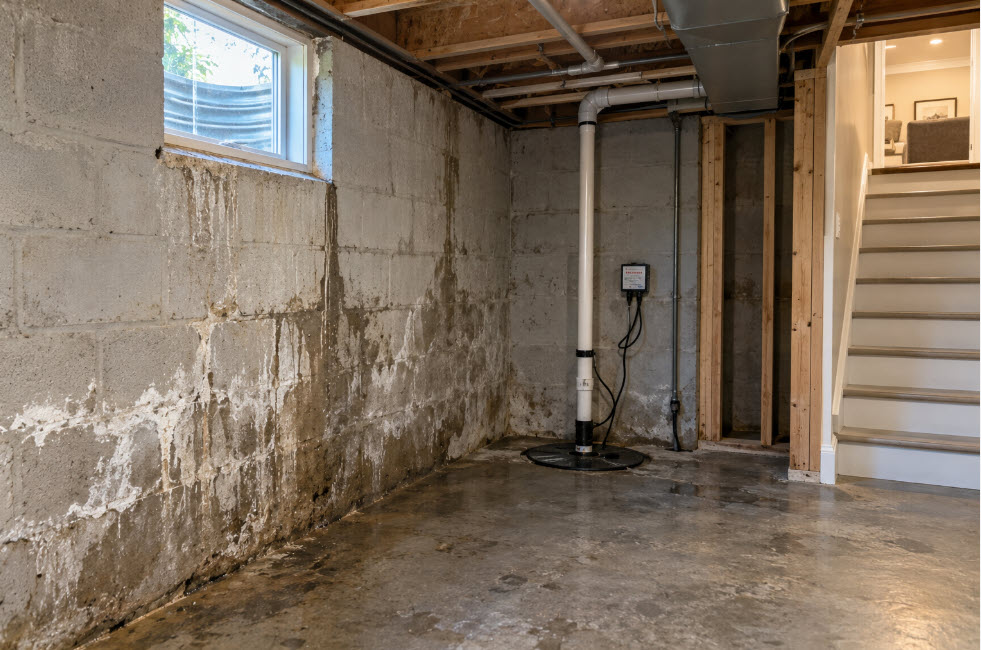
You may notice damp walls, discoloration, flaking paint, mineral deposits, or a generally humid basement rather than standing water.
6. Condensation and High Humidity
Not every wet basement is leaking.
Warm, humid air can enter a cooler basement and condense on cold pipes, walls, windows, and other surfaces.
If your basement feels damp during the summer but doesn’t noticeably worsen during rainstorms, humidity or condensation could be contributing to the problem.
A dehumidifier may help manage humidity, but persistent moisture should still be investigated to make sure water isn’t entering through the foundation.
Signs Your Basement May Have a Moisture Problem
Standing water is an obvious warning sign, but basement moisture problems frequently start much more subtly.
Watch for:
- Musty or earthy odors
- Damp basement walls
- Water stains or discoloration
- White, chalky deposits on masonry
- Peeling or bubbling paint
- Rust on metal objects or appliances
- Warped flooring
- Damp carpeting
- Condensation on pipes or windows
- Visible mold or mildew
- Water entering after storms
- Cracks that appear wet
- Dark staining along the bottom of foundation walls
You should also pay attention to when the problem occurs.
Moisture that appears only after heavy rain suggests a different source than year-round condensation. Likewise, water appearing where the floor meets the wall may indicate a different issue than water entering through a window well or a specific foundation crack.
Those details help determine the appropriate solution.
What Is the Best Way to Waterproof a Basement in Delaware County?
The best basement waterproofing solution depends on where the water is coming from.
There isn’t a single product that solves every moisture problem.
A comprehensive approach may include one or more of the following.
French Drain Installation
A French drain helps collect water and redirect it before it can accumulate inside the basement.
Interior drainage systems are often installed around the perimeter of the basement to capture water entering around or beneath the foundation and direct it toward a sump system.
For homes experiencing recurring groundwater intrusion, a properly designed drainage system can be an important long-term solution.
Sump Pump Installation
A sump pump collects water in a basin and pumps it away from the house.
Sump systems are particularly useful when groundwater routinely accumulates beneath the basement or when they’re paired with an interior drainage system.
Because the pump is responsible for removing collected water, proper installation and discharge location are critical.
Foundation Crack Repair
If water is entering through a specific foundation crack, repairing the crack may be part of the solution.
However, simply sealing a visible crack isn’t always enough.
If poor drainage or water pressure caused the problem, addressing the underlying water source can help prevent recurring issues.
Moisture and Vapor Barriers
Moisture barriers can help control water vapor moving through foundation walls and other below-grade surfaces.
They’re particularly valuable when preparing a basement for insulation, framing, drywall, or other finishing materials.
The key is installing the correct system for the conditions rather than simply covering a damp wall.
Exterior Drainage Improvements
Sometimes the best basement waterproofing work begins outside.
Solutions may include:
- Improving grading around the house
- Extending downspouts
- Correcting drainage patterns
- Addressing areas where water pools near the foundation
- Repairing gutters
- Improving window well drainage
Reducing the amount of water reaching your foundation can reduce the pressure your basement waterproofing system has to manage.
Humidity Control
A dehumidifier can be useful in Delaware County basements, particularly during humid Pennsylvania summers.
However, a dehumidifier should not be used as a substitute for correcting active water intrusion.
Think of humidity control as one component of a dry-basement strategy rather than a solution for an actual leak.
Waterproof Before You Finish Your Basement
Planning a basement remodel?
Address moisture first.
This is one of the most important steps homeowners can take before investing in a finished basement.
Installing framing, insulation, drywall, flooring, cabinetry, or carpeting over an unresolved moisture problem can trap water behind finished surfaces. By the time the damage becomes visible, materials may need to be removed and replaced.
A better sequence is:
- Inspect the basement for signs of water and moisture.
- Identify where the moisture originates.
- Correct drainage or waterproofing problems.
- Verify the basement is appropriately protected.
- Plan insulation and moisture-resistant materials.
- Begin the basement finishing project.
Cumming Construction can incorporate moisture management into the broader basement remodeling process, allowing homeowners to address the underlying space before investing in the finished room.
Can Basement Moisture Cause Mold?
Yes. Persistent moisture creates conditions that can support mold and mildew growth.
That’s why a musty-smelling basement shouldn’t automatically be dismissed as something that simply comes with having an older house.
Controlling the moisture source is the first priority.
If significant mold growth is already present, professional mold assessment or remediation may also be appropriate depending on the extent and location of the problem.
Is a Little Water in the Basement Really a Big Deal?
Occasional basement water can be easy to ignore—especially if it only happens during unusually heavy storms.
But recurring water intrusion indicates that water is finding a reliable path into the house.
Over time, moisture can affect:
- Flooring
- Drywall
- Insulation
- Stored belongings
- Wood framing
- Indoor air quality
- Finished basement materials
- Foundation and masonry components
The earlier the source is identified, the easier it usually is to protect the basement before additional damage occurs.
Basement Waterproofing for Older Delaware County Homes
Older homes are part of what gives Delaware County so much character, but they can also require a different approach to basement waterproofing.
A stone foundation in an older Havertown home, for example, shouldn’t automatically be treated the same way as a modern poured-concrete foundation.
The waterproofing strategy needs to account for the home’s construction, drainage, foundation condition, previous renovations, and how the homeowner plans to use the basement.
That’s particularly important if you’re considering turning an unfinished basement into a family room, office, gym, playroom, guest space, or entertainment area.
Waterproofing isn’t just another line item in that project.
It’s the foundation of a successful basement remodel.
Basement Waterproofing & Remodeling in Delaware County, PA
Cumming Construction is based in Havertown and has served homeowners throughout the Philadelphia suburbs since 1999.
Our team understands the challenges that come with remodeling older homes and basements throughout Delaware County. Depending on your home’s needs, basement projects may involve drainage improvements, French drains, sump pumps, waterproofing, moisture control, structural work, insulation, flooring, framing, drywall, and complete basement finishing.
We work with homeowners throughout communities including:
- Havertown
- Media
- Springfield
- Broomall
- Drexel Hill
- Upper Darby
- Swarthmore
- Ridley Park
- Glen Mills
- Clifton Heights
- And surrounding Delaware County communities
If you’re considering finishing your basement—or you’re tired of worrying every time heavy rain is in the forecast—the first step is determining exactly where the moisture is coming from.
Contact Cumming Construction to discuss basement waterproofing, drainage, or basement remodeling solutions for your Delaware County home.
Frequently Asked Questions About Basement Waterproofing in Delaware County
Why does my basement get wet when it rains?
A basement that gets wet after rain may be experiencing poor exterior drainage, overflowing gutters, groundwater pressure, foundation cracks, window well problems, or water entering where the basement wall meets the floor. The location and timing of the water can help determine the cause.
What is the best basement waterproofing system?
There is no single best system for every house. Depending on the source of the moisture, the solution could involve a French drain, sump pump, crack repair, moisture barrier, exterior drainage improvements, grading corrections, or multiple methods working together.
Do French drains help keep basements dry?
Yes. A properly designed French drain can collect water around the basement perimeter and direct it toward an appropriate drainage or sump system. French drains can be particularly useful when groundwater or perimeter seepage is contributing to basement moisture.
Do I need a sump pump in my Delaware County home?
Not every basement needs a sump pump. Homes experiencing groundwater intrusion or using an interior drainage system may benefit significantly from one. A basement assessment can determine whether a sump system makes sense for your property.
Why does my basement smell musty but have no visible water?
A musty basement can indicate elevated humidity, condensation, hidden moisture, or mold or mildew growth. Even without standing water, it’s worth investigating the source rather than simply masking the odor.
Can I finish a basement that has moisture problems?
Yes—but the moisture problem should be addressed first. Waterproofing and moisture management should happen before installing framing, insulation, drywall, flooring, or other finished materials.
How do I know whether basement moisture is condensation or a leak?
Timing provides an important clue. Moisture that appears after rain may indicate water intrusion, while moisture appearing primarily during warm, humid weather may be condensation. Because both can occur simultaneously, a professional inspection may be necessary to identify the source.
Why is there white powder on my basement walls?
White, powdery or crystalline material on masonry is often efflorescence, which occurs when moisture moves through masonry and leaves mineral deposits behind as the water evaporates. It can be an important clue that moisture is moving through the wall.
How much does basement waterproofing cost in Delaware County, PA?
Basement waterproofing costs vary considerably because the required solution depends on the source and severity of the water problem, foundation type, basement size, drainage needs, and whether systems such as French drains or sump pumps are required. An on-site evaluation is the best way to determine the appropriate scope and cost.
Who installs French drains and provides basement waterproofing in Delaware County, PA?
Cumming Construction provides French drain installation, waterproofing, moisture-control solutions, and basement remodeling services for homeowners in Havertown and throughout Delaware County and surrounding southeastern Pennsylvania communities.